The Existing Surface
Identify the roof covering and previous treatments. Materials that look alike may need different cleaning or primers.
Commercial roofing · Northern Arizona
Restore a suitable commercial roof with silicone coating, after leaks, moisture, and surface compatibility have been checked.
Get A Free Estimate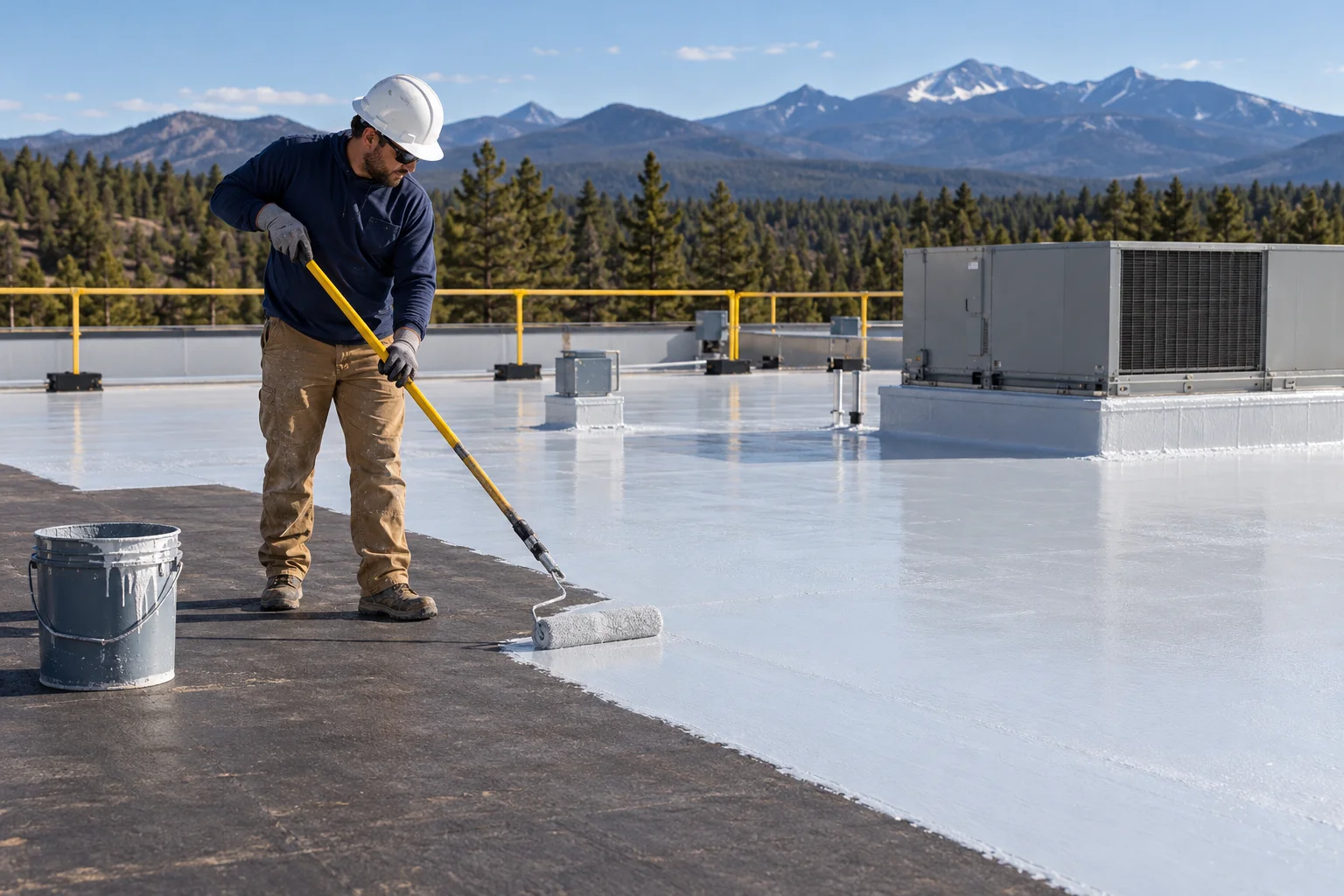
Silicone roof coating is a liquid-applied protective layer that cures over an existing roof. We offer it for commercial buildings where the roof can support restoration. The work includes the repairs and preparation needed beneath the finish; applying silicone is only one part of the job.
The existing membrane or metal, previous coatings, and condition below the surface determine whether silicone is appropriate. A roof with widespread wet insulation or failing support may need removal and replacement of affected materials before any coating can be considered.
Some silicone roof systems are designed to tolerate specified standing-water exposure. That is a product characteristic, not a drainage repair. A coating does not clear a blocked outlet or change the slope of a roof.
We review where water collects, how it leaves the roof, and whether repairs are needed at drains or low areas. The manufacturer’s requirements govern whether the chosen system can be used. Persistent ponding should not be dismissed simply because silicone is being proposed.
Identify the roof covering and previous treatments. Materials that look alike may need different cleaning or primers.
Check whether the prepared surface will hold the proposed coating. A small test area can expose a compatibility problem before full application.
Investigate signs of water below the surface and repair damaged details. A new finish should not hide an unresolved roof problem.
Review leaks, drainage, previous repairs, and the condition of the existing roof.
Complete necessary repairs, clean and dry the roof, and carry out the required adhesion and primer checks.
Treat joints and openings as specified, then apply the selected silicone system at its required coverage.
Review finished details, future roof access, and maintenance instructions.
Keep usable parts of the roof instead of removing them solely because the surface needs renewal.
Restoration may reduce removal, disposal, and disruption when the underlying roof is sound.
A correctly prepared and applied system provides a new protective surface over the approved roof area.
Future renewal may be possible if the roof remains suitable and the new materials are compatible.
Silicone is not automatically the best option for every commercial roof. Drainage, the existing surface, application conditions, and future maintenance all affect the choice. Our acrylic coating guide explains where that option may fit.
For Flagstaff projects, scheduling must allow the roof to be prepared and the coating to cure within the product’s limits. A forecast alone cannot confirm readiness; conditions on the roof also need to be checked.
A restored roof still needs care. Tell us about regular equipment servicing and any planned installation of new rooftop units. The coating recommendation should account for those activities and explain how later work can be completed without unnecessary damage.
Keep the product name, application records, and maintenance instructions after completion. If the roof needs another repair or coating later, those records help identify suitable materials. A roof’s appearance alone may not reveal which finish was applied or how the details were treated.
Possibly, after the old material is identified and its condition and adhesion are checked. Cleaning, primer, removal, or another approach may be needed. Do not assume one coating can be applied over any other.
No. Certain systems tolerate water exposure, but the drainage problem still needs assessment. Blocked outlets, low areas, and related defects require their own recommendations.
Do not treat surface moisture as an acceptable starting condition. Preparation and application must meet the selected product’s requirements, including dryness and conditions during curing.
A coating is not a substitute for a designed insulation layer. If insulation is a priority, the assessment should address the roof assembly separately.
Access should follow the system’s instructions. Regular equipment-service routes may need approved walkway protection; a roof coating should not be treated as a general traffic surface.
Look for repairs, preparation, primer where required, detail work, coating coverage, and maintenance information. Any exclusions or uninspected areas should be clear before work is approved.
Call (928) 430-5699 to discuss your building and arrange the next step.