Repair Openings
Address leaking seams, flashing defects, and damaged areas before applying the finish.
Commercial roofing · Northern Arizona
Acrylic coating can renew a compatible commercial roof when its condition, drainage, and application weather are suitable.
Get A Free Estimate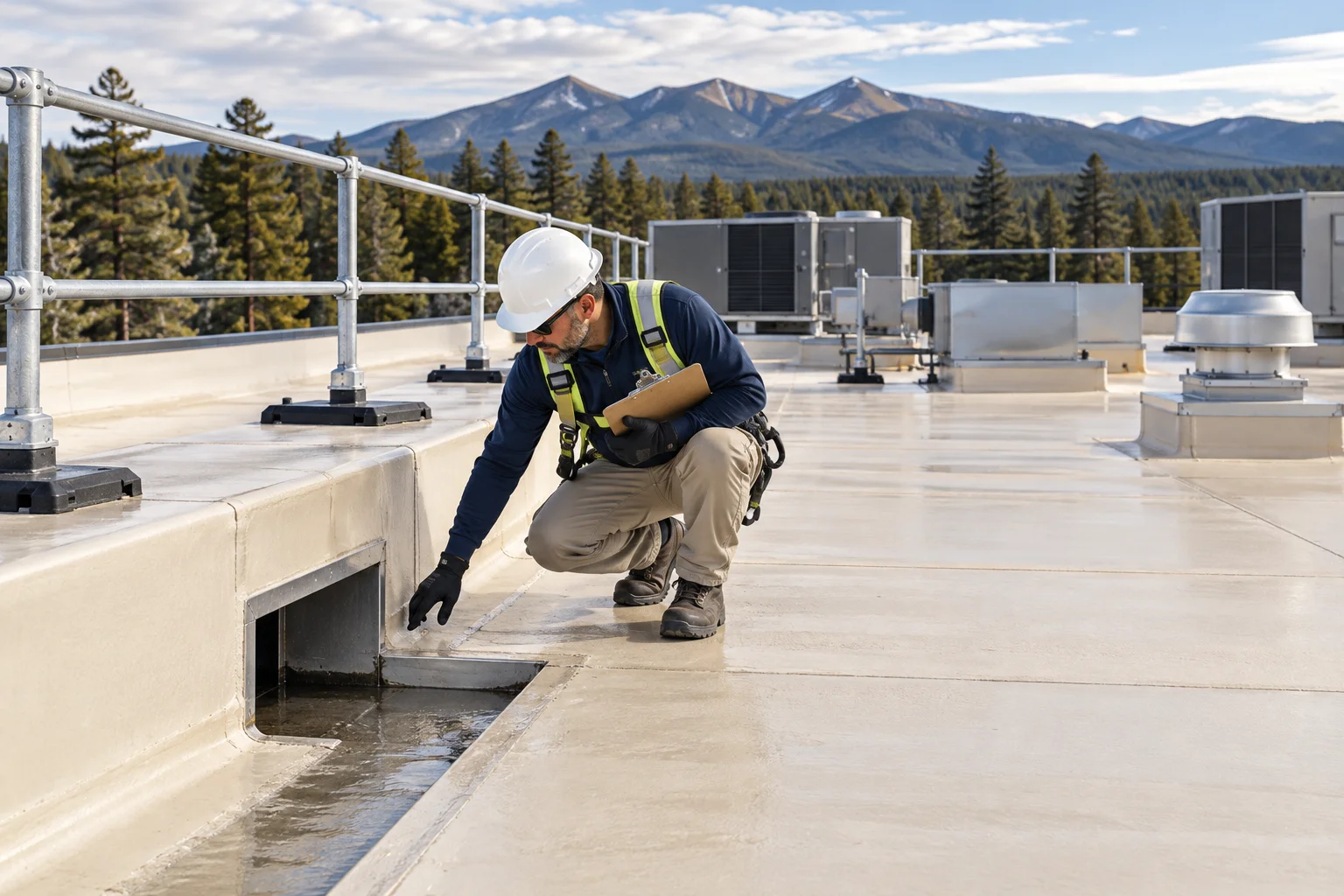
Acrylic roof coatings are commonly water-based protective finishes. We offer acrylic coating for commercial roofs that can be repaired, prepared, and coated under the selected product’s requirements. The roof must be suitable underneath the new finish as well as at the surface.
Acrylic may be worth considering for a roof with sound materials and effective drainage. Product restrictions differ, including which surfaces and slopes are allowed. The specification for the actual coating takes priority over a general statement that acrylic works on metal or membrane roofing.
Acrylic is not a shortcut around standing water. Many products restrict use where water collects for long periods. If an outlet is blocked or a low area stays wet, that issue needs review before a coating is chosen.
Application also needs a suitable drying window. Rain, dew, cold surfaces, and freezing conditions can affect the work. In the Flagstaff area, we plan preparation and application around the full product requirements, including what happens after the coating goes down.
Address leaking seams, flashing defects, and damaged areas before applying the finish.
Loose coatings, dirt, and contamination can prevent a reliable bond. The preparation must suit the roof.
Check the existing material, primer needs, and adhesion. A white finish alone does not identify the correct product.
Check the roof material, drainage, leak history, and previous coating condition.
Review the manufacturer’s surface, slope, preparation, and weather limits.
Complete the preparation and detail work, then apply the specified coating layers.
Explain inspections, drain care, roof access, and when a future recoat should be assessed.
Protect a suitable existing roof surface after its repairs are complete.
Avoid replacing roof areas that remain fit for restoration.
Less removal and disposal may lower the overall cost compared with replacement; repairs still need to be included.
An identified coating system and good records make later compatible repairs or recoating easier to plan.
If the roof meets acrylic’s requirements, compare the complete installation and maintenance plan with the alternatives. Silicone coating may be another option for a suitable roof with different water-exposure needs.
Neither choice repairs structural damage or makes wet insulation sound. When the existing roof has broader problems, replacing damaged sections or the full assembly may be the better use of the budget.
For background on reflective finishes, see the U.S. Department of Energy guide to cool roofs. Its general energy principles are not a project-specific savings estimate.
An acrylic coating needs more than a dry-looking roof when work starts. The chosen product may require particular surface temperatures and enough suitable weather after application. We review those requirements when planning the job and explain why the work may need to be rescheduled.
The proposal should identify preparation, primer where needed, and the specified coating application. Ask how the finished work will be checked. The amount of coating ordered is not, by itself, confirmation that every roof area received the required coverage.
It may be suitable for a particular roof and application window. The selected product must allow the roof surface, drainage, slope, and conditions expected during installation and drying.
No. They are different coating chemistries with different preparation, curing, and performance requirements. The lower-priced container is not necessarily the lower-cost completed project.
Check the exact product restrictions. Many acrylic coatings are not intended for prolonged ponding. Investigate the drainage and choose the system only after those conditions are understood.
It may reduce heat absorbed from sunlight. The effect on annual energy use depends on the building, its insulation, and its heating and cooling needs. It is not a guaranteed saving.
Sometimes, if the roof and existing coating are suitable. The old finish needs assessment, preparation, and compatible materials; peeling or damaged areas cannot simply be ignored.
The contractor checks the forecast and conditions at the roof against the product instructions. Time for preparation and drying matters as much as the hours spent applying coating.
Call (928) 438-8009 to discuss your building and arrange the next step.